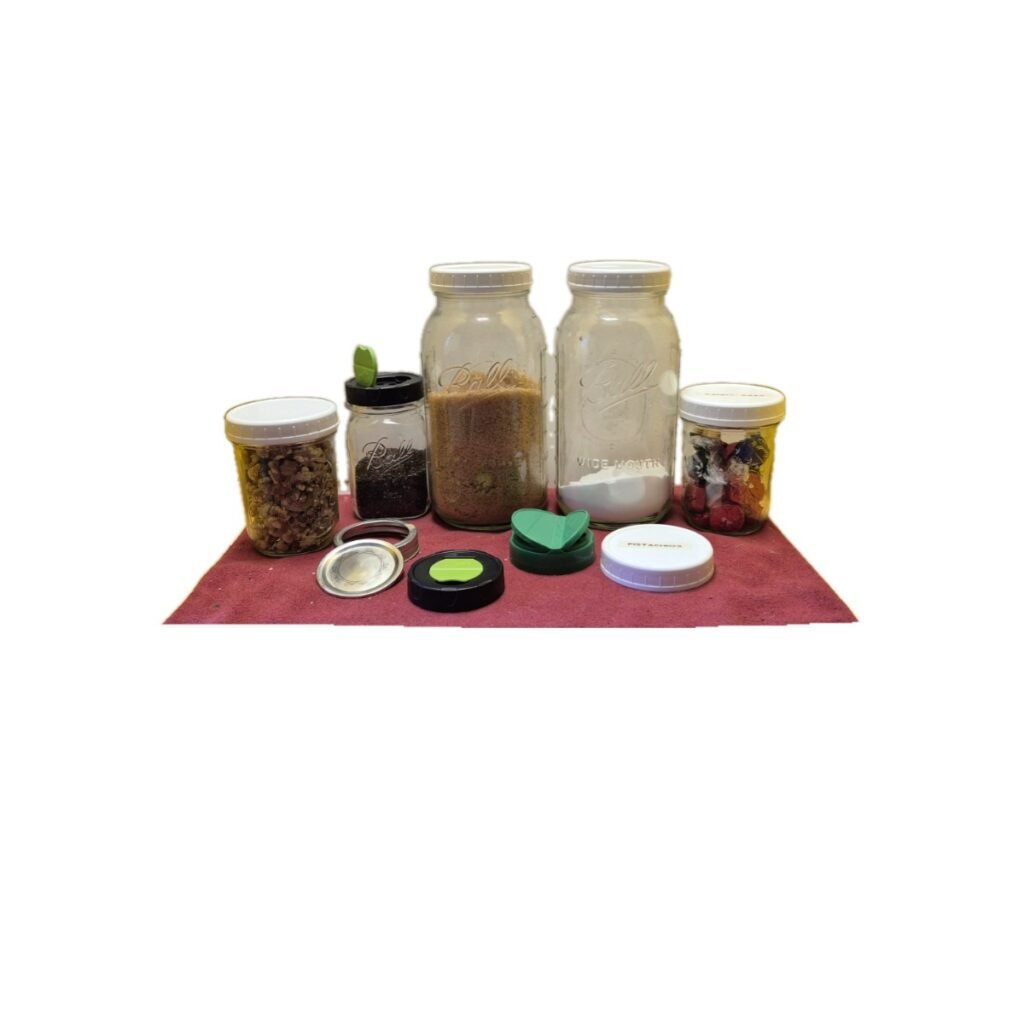
Older homes breathe, shift, and let humidity creep into cabinets and drawers. That makes food storage tricky — especially for nuts, baking ingredients, and anything ants love. Mason jars offer airtight, moisture‑proof, pest‑proof storage that works beautifully in older kitchens. Learn how to use jars, repurposed lids, and simple moisture‑control tools to keep your pantry organized and your food fresh. Here’s how to use them effectively.
Smart Mason Jar Storage for Old Homes: Humidity, Ants, and Everyday Pantry Solutions:
Old homes have character — and quirks. Whether your house is 80 years old or pushing past 100, you’ve probably dealt with humidity swings, drafty cabinets, shifting temperatures, and the occasional ant trail heading straight for anything sweet.
That’s exactly why so many people in older homes rely on mason jars for everyday pantry storage. They’re airtight, durable, pest‑proof, and surprisingly adaptable. If you live in an older house, they’re one of the simplest ways to keep food fresh and organized.
Here’s how to use mason jars effectively in an old‑home kitchen, plus a few clever tricks that make them even better.
Why Mason Jars Work So Well in Old Homes:
Older houses “breathe.” They have tiny gaps in trim, shifting humidity, warm pockets near appliances, and cool pockets near exterior walls. Even inside drawers and cabinets, the air isn’t stable.
Mason jars solve all of that because they’re:
airtight
moisture‑proof
pest‑proof
non‑reactive
long‑lasting
They don’t flex like plastic containers, and they don’t let humidity creep in. For ingredients that go stale quickly — nuts, chocolate, baking soda, maple sugar — jars are the best defense.
A Real Old‑Home Pantry Setup: What’s in the Jars?
A practical mason‑jar pantry might include:
Half‑gallon jars:
Baking soda
Pure maple sugar (with a clay moisture‑control piece)
Pint jars:
Chocolate
Walnuts
Chia seeds (with a Ball shaker lid)
Lids and accessories:
Ball food‑grade plastic lids – including reguolar mouth and large mouth plus shaker tops.
Old canning rings and lids (still great for everyday sealing).
Repurposed shaker lids from Parmesan cheese containers (they fit regular‑mouth jars perfectly).
- Label‑maker tags for easy identification.
This setup is airtight, ant‑proof, and ideal for the unpredictable humidity older homes experience.
Humidity Happens: Why Nuts Sometimes Go Soft:
Even with good storage habits, some foods are more sensitive than others. Mixed nuts, walnuts, pecans, and cashews absorb moisture quickly — especially during weeks of heavy rain.
If nuts are stored in their original plastic container, they can soften in just a few days because:
the plastic flexes
the lid isn’t truly airtight
humidity gets inside once opened
The fix is simple:
Toast the nuts at 300°F for 8–12 minutes.
Cool completely.
Transfer to a mason jar.
Add a food‑safe desiccant packet. (and YES, they can be re-used!).
Once they’re in glass, they stay crisp much longer.
Repurposed Lids: The Old‑Home Pantry Secret Weapon:
People who live in older homes tend to be resourceful — and mason jars make that easy.
One of the best tricks is the Parmesan cheese shaker lid. The lid from a standard Parmigiano container fits a regular‑mouth Ball jar perfectly. It screws on tightly and instantly turns the jar into a shaker. It’s free, food‑safe, and incredibly handy.
Use it for:
chia seeds
flax
cinnamon sugar
baking soda
spice blends
powdered maple sugar
Ball’s own plastic lids, old canning rings, and shaker tops round out a system that’s flexible and airtight — perfect for older homes.
Moisture Control Tools That Actually Work
A few simple additions make mason jar storage even better:
Clay moisture‑control pieces (great for maple sugar)
Food‑safe silica gel packets (from coffee or snacks)
Tight‑sealing plastic lids
Glass jars for bulk items
These tools keep ingredients dry, crisp, and fresh even during the dampest weeks.
Food‑Safe Silica Packets: Can Be Re‑Used if the Packet Is Not Damaged:
Food‑grade silica gel packets can be reused many times as long as the packet itself is intact. The beads inside don’t expire — they simply absorb moisture until they’re saturated. As long as the outer packet isn’t torn, punctured, or stained, it’s safe to use again.
A packet is considered safe to reuse when:
the paper or Tyvek pouch is not ripped
no beads are leaking
the packet hasn’t touched anything oily or wet
the printing is still readable
it came from a food product (coffee, snacks, vitamins, jerky, etc.)
If the packet looks worn, soft, or damp on the outside, toss it.
How to “Recharge” a Silica Packet: (Be careful):
If you want to restore its drying power:
Place the packet on a baking sheet
Heat at 200–250°F for 1–2 hours
Let it cool completely
Return it to your jar
This drives out the absorbed moisture and makes the packet work like new.
Where Reused Packets Work Best
mason jars
spice jars
nuts and seeds
chocolate
baking soda
maple sugar
dried fruit
chia or flax
Food‑safe silica packets can be reused as long as the outer pouch is intact. You can place the packet directly inside the jar with your food — on top or in the middle — as long as the packet stays sealed and the beads never touch the food.
A Practical, Old‑Home Pantry System:
Between humidity, ants, and drafty cabinets, older homes need storage that can handle the environment. Mason jars — paired with smart lids, moisture‑control tools, and a little creativity — offer a simple, reliable solution.
It’s sustainable, affordable, and perfectly suited to the quirks of older kitchens.
FAQ’s:
- Are mason jars really airtight for pantry storage? Yes. Mason jars create a true airtight seal, which prevents humidity, pests, and odors from getting inside. This makes them ideal for storing nuts, baking ingredients, chocolate, spices, and other moisture‑sensitive foods in older homes.
- Can mason jars handle temperature changes in old homes? Yes. Mason jars are made from thick, tempered glass designed to withstand normal household temperature changes. They handle cool cabinets, warm kitchens, and seasonal humidity swings without issues. As long as you’re not moving a jar directly from the freezer to a hot oven, they’re extremely stable for everyday pantry storage.
- Are Ball plastic lids safe for long‑term food storage? Ball’s food‑grade plastic lids are safe for long‑term storage of dry goods like nuts, chocolate, baking ingredients, seeds, spices, and pantry staples. They create a tight everyday seal, don’t rust, and are easier to open than metal rings. While they aren’t designed for canning, they’re excellent for airtight pantry use in older homes.
- Can I reuse old canning lids and rings for everyday storage? Yes. Even if a canning lid can’t be used for pressure canning anymore, the rubber gasket still creates a tight seal for dry pantry items. Rings and lids are perfectly safe for everyday storage as long as they’re clean and not rusty.
- Can I use repurposed lids on mason jars? Yes. Some lids — like Parmesan cheese shaker lids — fit regular‑mouth mason jars perfectly. They’re food‑safe and create a tight seal, making them great for chia seeds, spices, baking soda, and other items you want to shake or sprinkle.
- Do food‑safe silica gel packets work inside mason jars? They do. Silica packets help control moisture and keep foods like nuts, chocolate, and maple sugar dry. They can be reused as long as the packet is not torn or leaking, and they can be placed directly inside the jar with the food as long as the beads remain sealed inside the pouch.
- Why do nuts go soft so quickly in old homes? Older homes experience humidity swings, drafts, and temperature changes. Nuts absorb moisture easily, especially when stored in non‑airtight plastic containers. Moving them to mason jars keeps them crisp much longer.
- How do I prevent ants from getting into pantry items in an old home? Use airtight containers like mason jars. Ants can’t get past a sealed jar, even if they find their way into cabinets or drawers. Storing sweets, nuts, and baking ingredients in jars is one of the most effective ant‑proofing methods.
❖ Related Articles ❖
How Safe Are the Containers You Use? A practical look at everyday food‑storage containers and what’s actually safe to use.
Unexpected Uses for Vicks VapoRub. Simple household tips and surprising ways people use Vicks beyond cold relief.
Homemade Laundry Detergent. A straightforward recipe using common ingredients for an effective DIY detergent.
Simple Shower Hack. A quick bathroom trick that helps keep your shower cleaner with almost no effort.
Cyclospora: What You Need to Know. A helpful guide to understanding Cyclospora, how it spreads, and how to protect your food.